

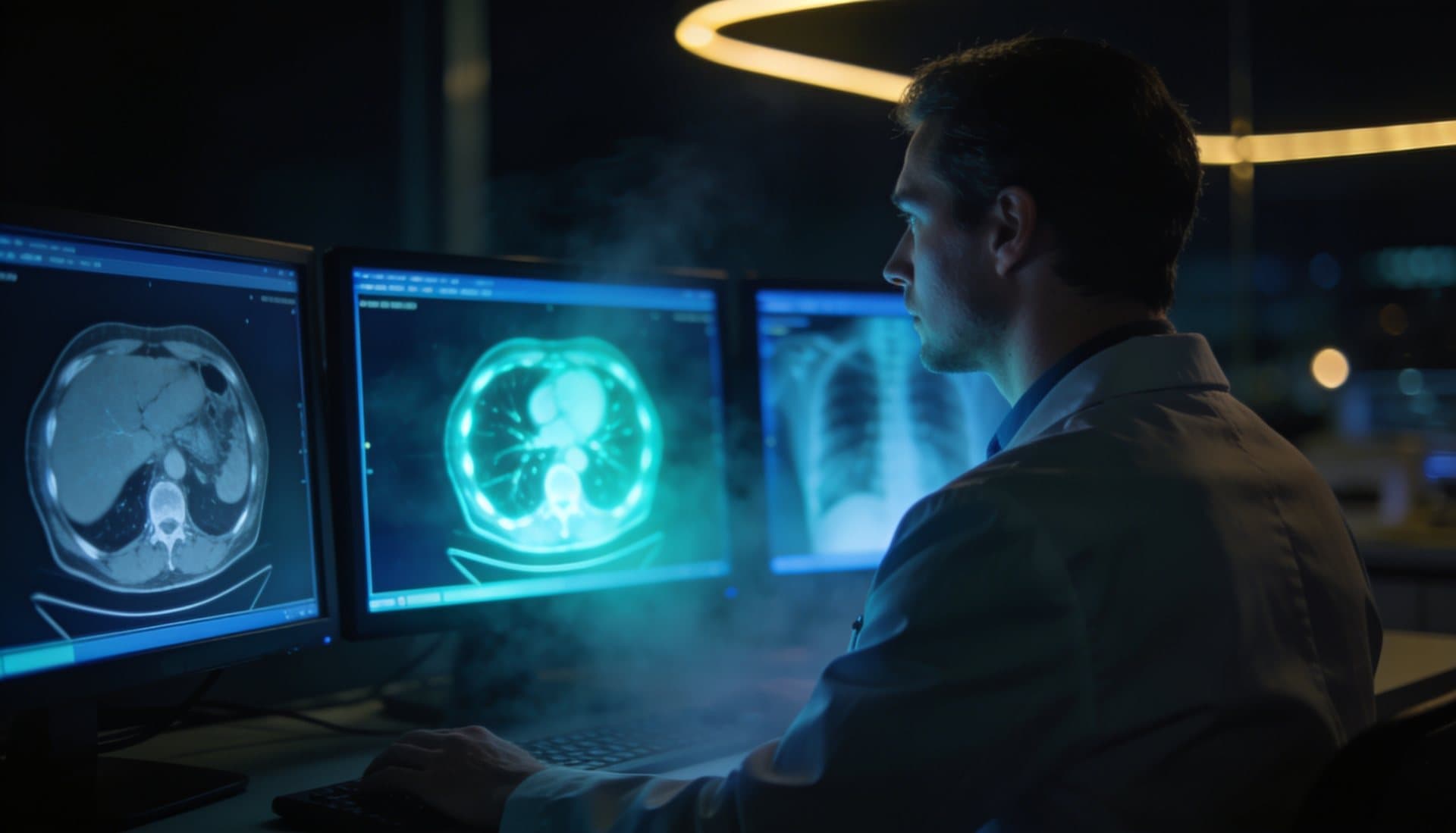
Radiologists
You sign the report, so the draft should start with you. OxRad Intelligence drafts each study on-site; you review, edit, and sign. Built to hand you time back, with responsibility exactly where it belongs.
Private by design
On-premise inference. Patient data stays on your site. Verifiable, auditable, private by design.
OxRad runs the AI on hardware in your clinic. Scans are read, reports are drafted, and a radiologist signs, without a single image transiting the cloud.

The model runs on-premise. No patient scan is uploaded, brokered, or stored off-site. Sovereignty is the architecture, not a setting.
OxChain and OxRad Protocol provide tamper-evident auditability and privacy-preserving improvement across sites, without raw scans leaving any site.
Built with practising radiologists and a lead investigator with 25+ years in diagnostic imaging. OxRad drafts; the clinician reviews and signs.
Who it's for
OxRad is not a platform for everyone. It is for the rooms where imaging actually happens, and the clinicians whose names go on the report.
You sign the report, so the draft should start with you. OxRad Intelligence drafts each study on-site; you review, edit, and sign. Built to hand you time back, with responsibility exactly where it belongs.
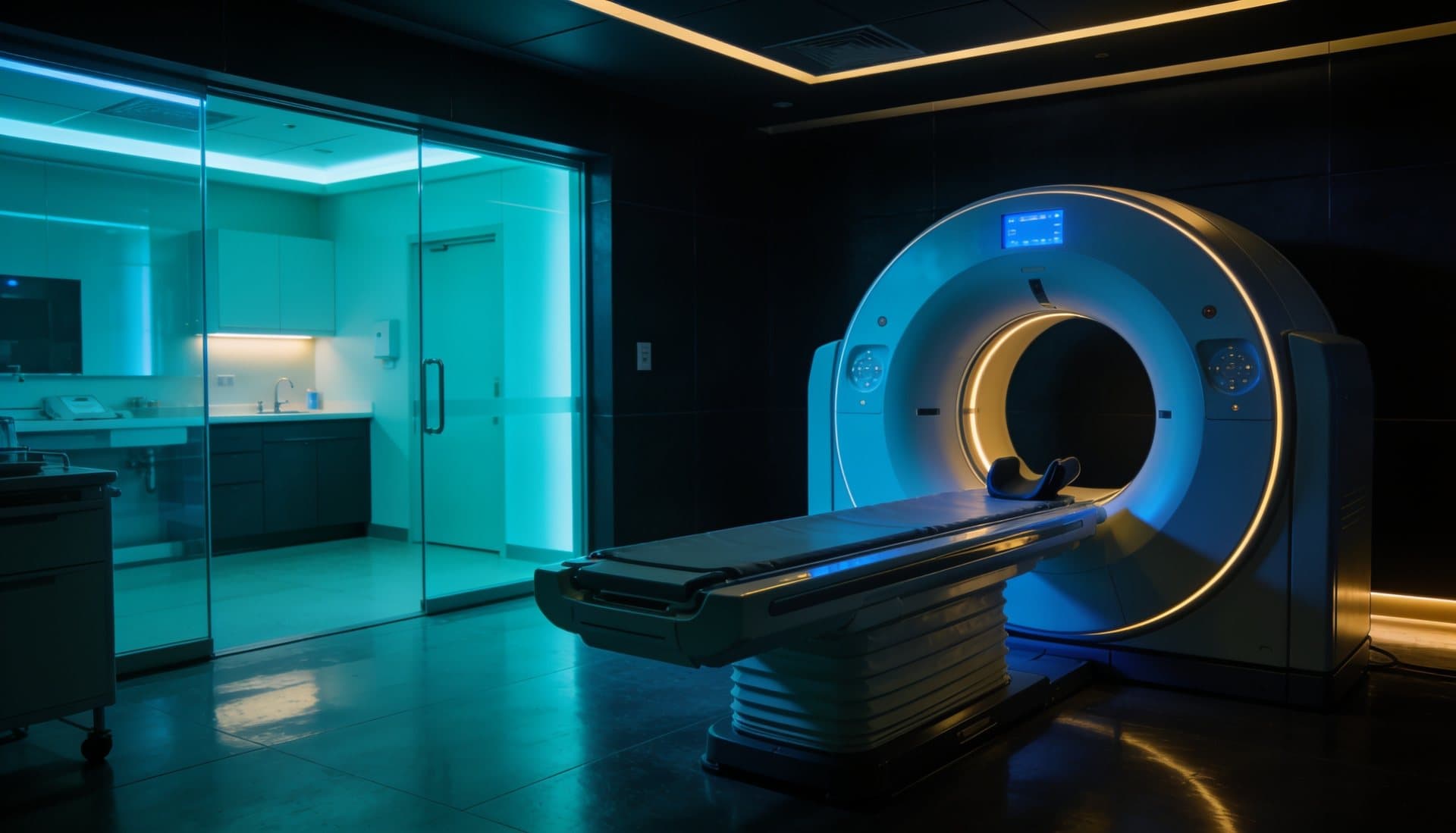
Your patients' scans never leave your building. The OxRad On-Site Node drops into the DICOM workflow you already run, with no per-study cloud inference dependency and no imaging transiting anyone else's network.
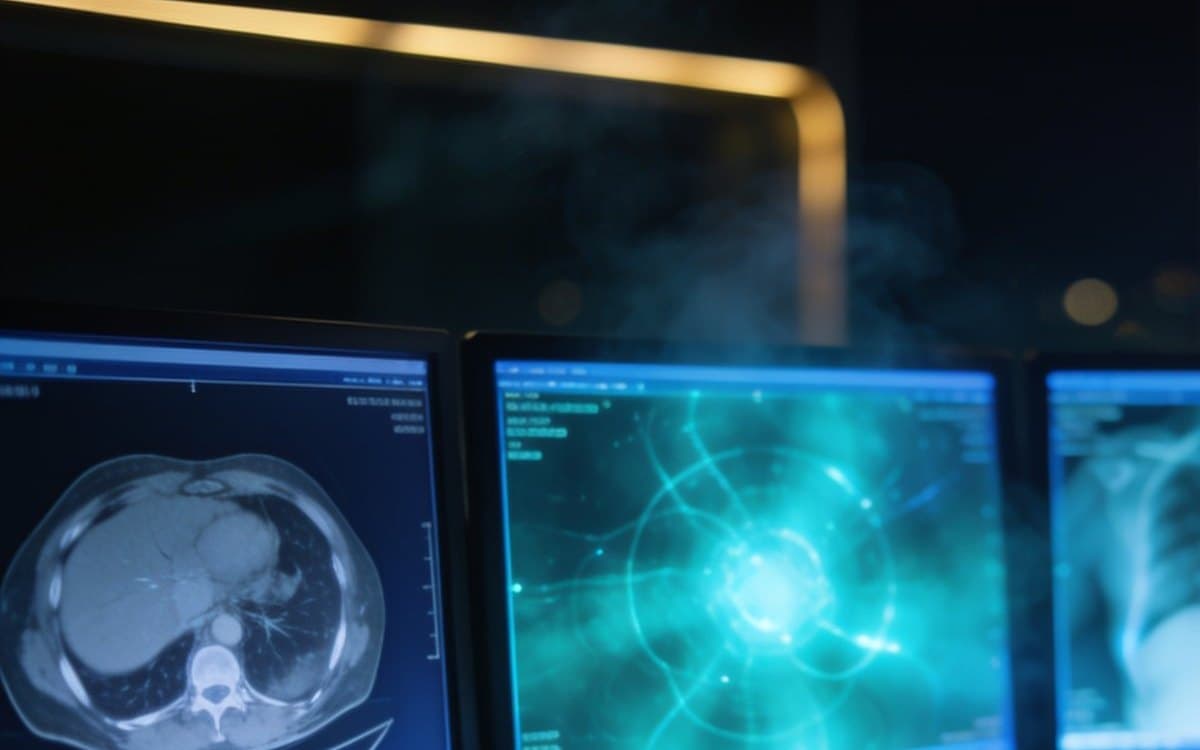
Govern multi-modality volume with proof, not promises. OxChain gives you a tamper-evident audit you can show a regulator or a board, and data residency is decided by where your hardware sits.
Sound like your reading room? Then we should talk.
DICOM in, drafted report out, a radiologist signs. The whole pipeline runs on your premises.
Scan in
A study arrives from the modality in standard DICOM, straight to the OxRad On-Site Node.
Drafted on-site
OxRad Intelligence reads the study and drafts the report on hardware in your clinic.
Draft report
A structured draft is produced locally, ready for clinical review.
Radiologist signs
A qualified radiologist reviews, edits if needed, and signs. OxRad never signs.
Many cloud-based AI workflows depend on moving sensitive imaging data away from the clinical site. OxRad takes a different path: inference runs on-site, so patient imaging data remains under the clinic’s control.
Read why on-premise matters for radiologyWhere we are
Built by a security-led founding team with real clinical access. Meet the team →
We are taking a small number of pilot partners.