
In research and development
A node small enough to go with the X-ray.
The OxRad On-Site Node in a portable form, drafting X-ray reports inside the unit itself. No internet. No network. No dependency on a link that may not be there.
Research and development
This configuration is in research and development. The core OxRad platform is built and in active testing. No field unit is deployed, and we make no clinical performance claims. We are looking for operational partners to shape it.
Built for denied and degraded communications
Remote, disconnected, congested, intermittent or deliberately denied communications. The unit assumes no connection at all. Everything it needs, it carries: the imaging store, the reporting intelligence, the audit record and the clinician's reading screen. When a link exists, it is used. When it does not, nothing stops.
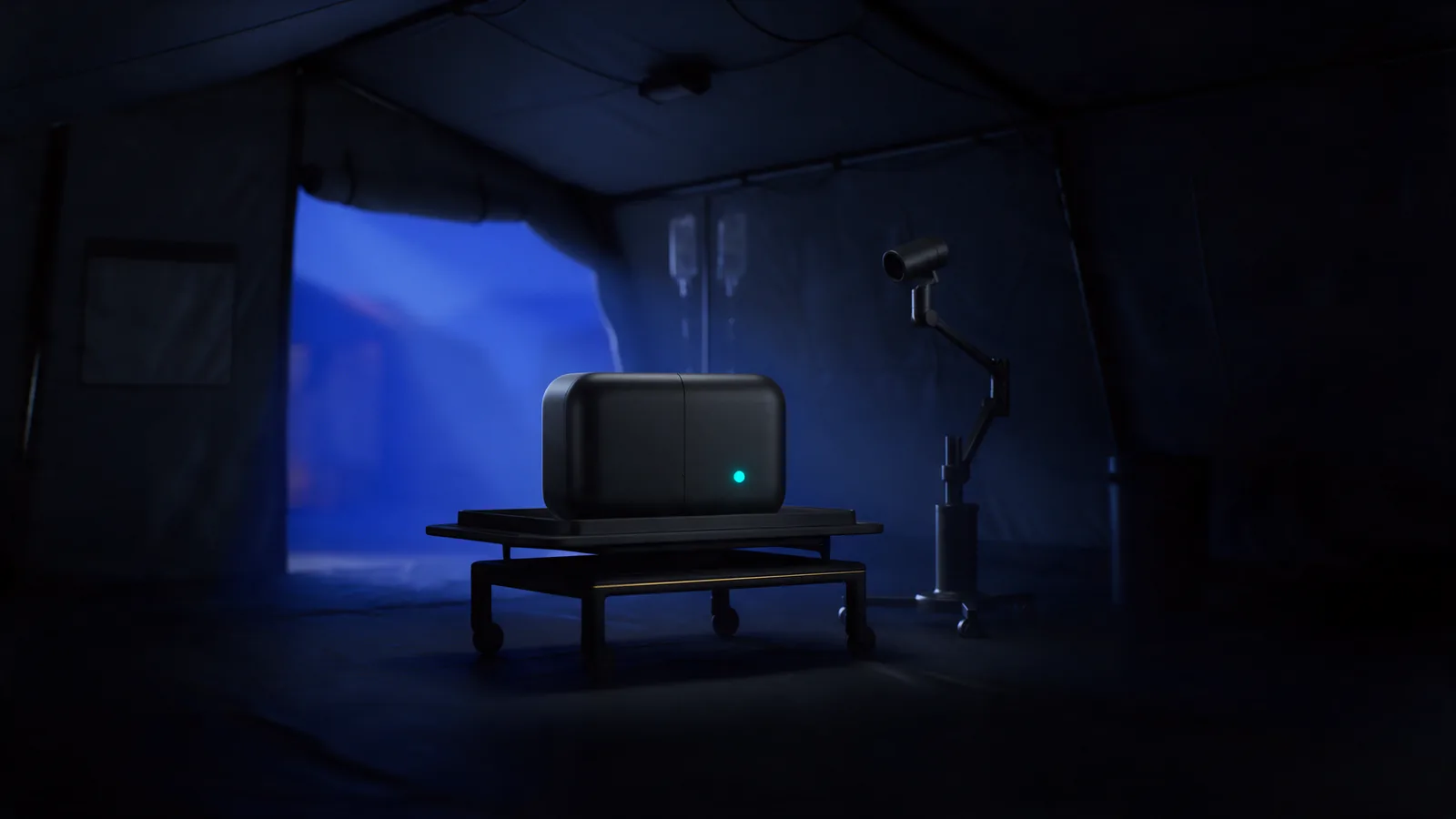
What the unit is
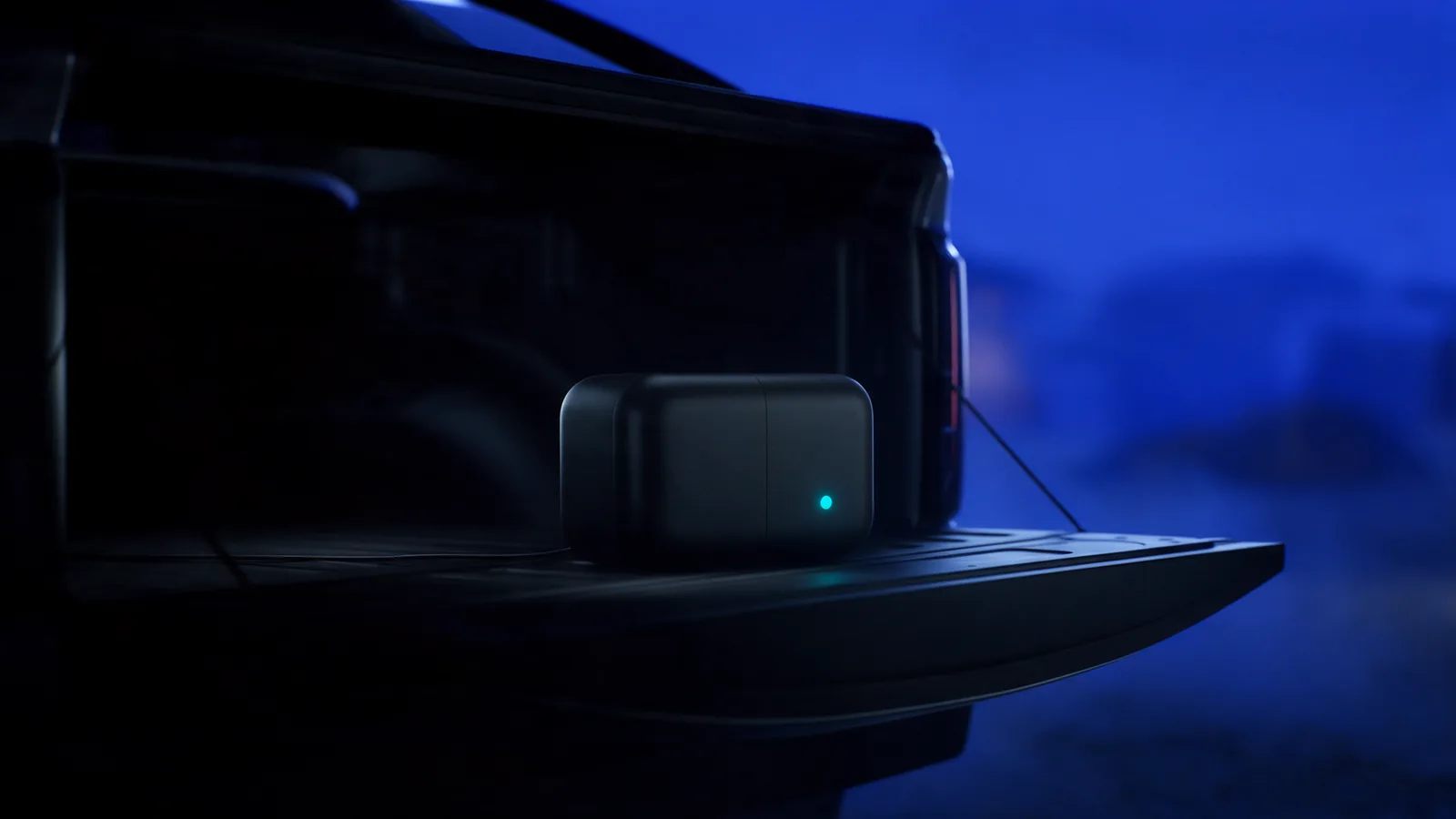
A sealed, portable compute unit that travels with the X-ray equipment.
Runs from vehicle, generator or battery power.
Serves the reading screen over its own local network, with no external connectivity required.
Holds the imaging store, the drafting intelligence and the OxChain audit record inside the case.
What it does in the first hour
- 01
Capture
The film is captured straight into the unit.
- 02
Urgency
The medic marks urgency. The queue follows that mark.
- 03
Preliminary
The unit drafts a clearly labelled preliminary in seconds.
- 04
Clinical decision
The clinician reads the film with the preliminary alongside, and treats on their own judgement.
- 05
Recorded
Everything is recorded, including the fact there was no link.
- 06
Sent when possible
When connectivity returns, the queue goes to the operator's own reporting hub.
- 07
Signed
A radiologist reviews and signs. If the signed report differs materially from the preliminary, an alert goes back to the treating team.
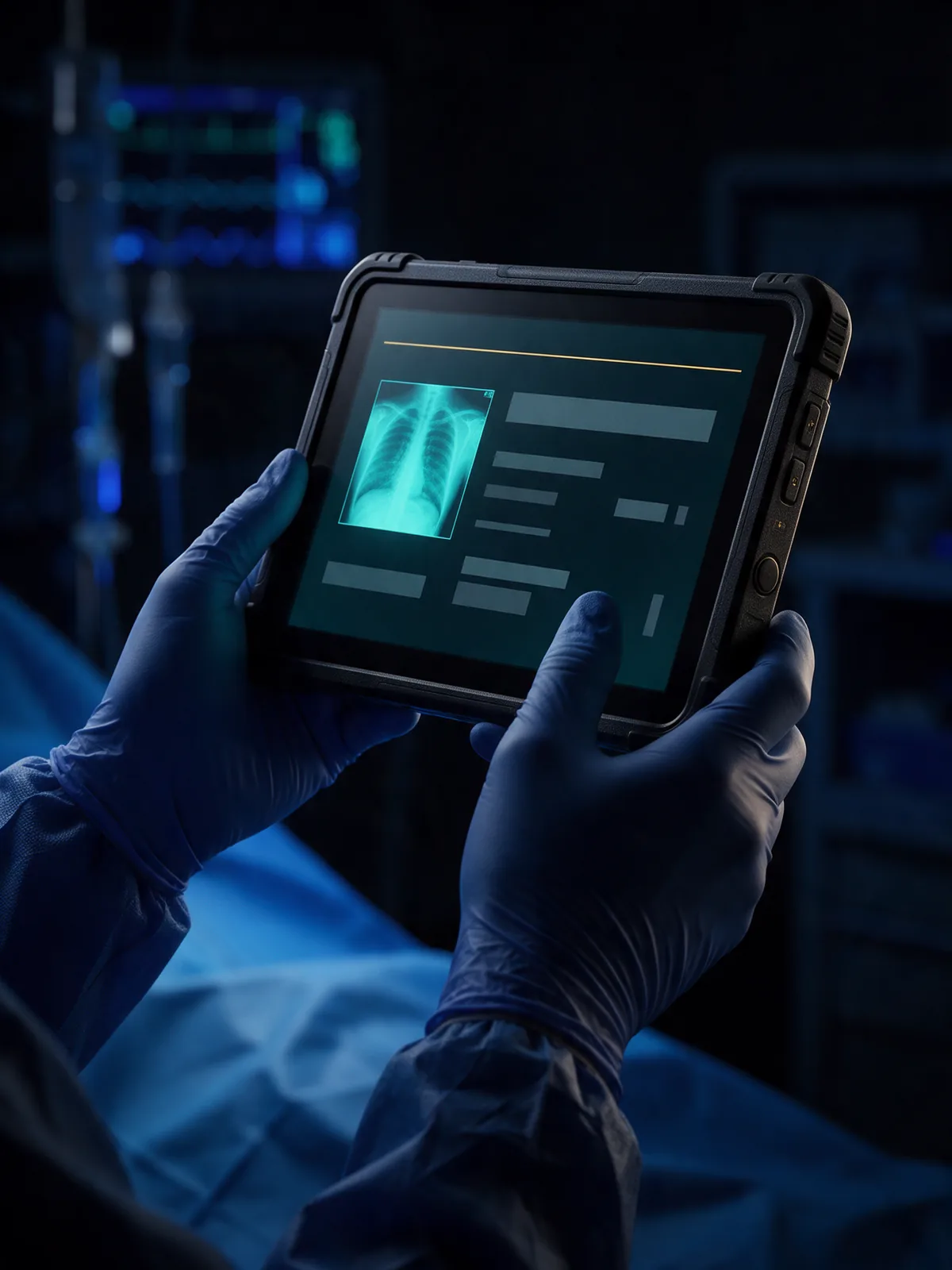
The rules that do not relax in the field
- The clinician decides. The unit produces a preliminary, never a report and never a diagnosis.
- Urgency is set by the medic. The unit never ranks casualties or patients.
- Nothing leaves the unit until the operator sends it.
- Every step is recorded by OxChain, and the offline gap is recorded too.
- Model updates are controlled, validated and versioned through OxRad Protocol. The unit never changes its own behaviour in the field.
Where it would be used
Defence medical teams
Medical teams operating where communications cannot be assumed.
Ambulance and major incident response
Pre-hospital and major incident settings where imaging happens away from the department.
Disaster and humanitarian deployment
Temporary clinics and mobile units set up where infrastructure is absent.
Remote and maritime clinics
Islands, vessels and remote sites where a link is intermittent at best.
Where this sits
| Item | State |
|---|---|
| Core OxRad platform | Built and in active testing |
| Chest X-ray reporting | Live report type |
| Musculoskeletal X-ray | In progress, joint by joint, through clinical review |
| CT and MRI | Future modalities, each gated on its own clinical validation |
| Field configuration | In research and development |
Help shape it before it is built.
We are looking for operational partners in emergency, humanitarian and defence medical settings to shape the requirements.